HISTORY OF PASCO COUNTY
Early Residents of Pasco County
A | B | C | D |
E | F | G | H |
I | J | K | L |
M | N | O | P |
Q | R | S | T |
U | V | W | X |
Y | Z
This page was last revised on June 19, 2020.
 JAMES HONOUR ST. CLAIR (1871-1949) was a long-time teacher in
Pasco County. He was born in Marion, S. C., on December 8, 1871. He
attended the University of Georgia and began his teaching career in
Georgia at age 17 as an assistant to his father who was also a teacher.
He moved to Florida in 1919 and taught one year at Oak Hill near Dade
City and two years at Pasco High School before moving to Elfers in
1921. He served as principal of Elfers Junior High School and then
taught at Gulf High School from 1923 until his retirement in 1941. At
Gulf he taught Latin and English and coached baseball and basketball
and was known as "Pop" St. Clair. He taught for 53 years.
In 1947 the athletic field at Gulf was dedicated in his honor
and on Nov. 28, 1952, a memorial plaque was placed at the southwest
corner of the field during ceremony at half-time.
The Gulf High Future Teachers of America chapter was named for him.
JAMES HONOUR ST. CLAIR (1871-1949) was a long-time teacher in
Pasco County. He was born in Marion, S. C., on December 8, 1871. He
attended the University of Georgia and began his teaching career in
Georgia at age 17 as an assistant to his father who was also a teacher.
He moved to Florida in 1919 and taught one year at Oak Hill near Dade
City and two years at Pasco High School before moving to Elfers in
1921. He served as principal of Elfers Junior High School and then
taught at Gulf High School from 1923 until his retirement in 1941. At
Gulf he taught Latin and English and coached baseball and basketball
and was known as "Pop" St. Clair. He taught for 53 years.
In 1947 the athletic field at Gulf was dedicated in his honor
and on Nov. 28, 1952, a memorial plaque was placed at the southwest
corner of the field during ceremony at half-time.
The Gulf High Future Teachers of America chapter was named for him.
In Tales of West Pasco Ralph Bellwood wrote:
Jumping from the far corner of the County at Aripeka where
Kolb lived, to Elfers, we find another outstanding personality whose
influence will be felt through generations to come, for he imparted
culture and learning through precept and example as an educator. We
refer to Professor J. H. St. Clair. He taught in Gulf High school for
many years. Principals came and went, but Professor St. Clair was
perhaps the strongest personality that Gulf High has ever had. He was a
quiet, dignified man, with a knack of getting ideas over to his pupils,
as few educators have. He was an avid fisherman and caught more bass
out of the Cotee and Anclote rivers than any other single man in the
area. He not only taught hundreds of young people, but gave three
teachers from his family, one being Mark St. Clair (now retired) who
for a number of years was Superintendent of Public Instruction for
Pasco County. Indeed, the St. Clair family has been a family of
educators. The Professor’s Mother and Father were teachers. His wife
and three children were or are now teaching, and two of his
grandchildren are teaching at present.
The 1942 Gulf High School yearbook is dedicated to St. Clair, as
follows:
Because he is devoted to the ideals of our school,
We look up to him.
Because he is firm and sincere,
We respect him.
Because he understands modern youth
We trust him.
Because he is like our own fathers
We revere him.
To such a friend,
MR. J. H. ST. CLAIR
The Senior Class of Gulf High School affectionately dedicates this the
first volume of "THE BUCCANEER.”
Children:
- Mark, q.v.
- Mrs. Katie DeLamorton, a music instructor at McFarlin Park
Elementary School in Tampa
- Mrs. Mary Lou Knight, a member of the first Gulf High School
graduating class in 1924. She became a librarian at Clearwater High
School.
MARK ST. CLAIR (died in 1995 at age 90) served as Pasco County Superintendent of Schools from 1949 to 1957.
He was born in Statesboro, Ga. His family moved to Dade City in 1919.
He attended 7th through 9th grades there. In 1921 his family moved to Elfers.
St. Clair was a member of Gulf High School’s first graduating class in 1924.
He graduated from Florida Southern College in Lakeland in 1928.
He was the principal at Trilby and Lacoochee before
being elected Superintendent of Schools. He subsequently was an assistant principal in Leesburg.
Lorise Abraham, a student at Lacoochee, recalled, "Prof. St. Clair was principal in my day and everybody, just
everybody loved that man, even when he had to reprimand us. Now, it really takes a special talent to have students
love you even when you've been forced to give them a licking or a lecture! Prof made learning so much fun and he
always brought humor into the classroom with him.”
In 1926 St. Clair married Alice Mullin, a teacher. She died in 1960.
He married Helen Jackson Swartsel in November 1962.
EDGAR SAPP (1896-1985) and his wife Florence Dix Sapp lived in the house abandoned by Aaron
M. Richey after Richey moved to Tarpon Springs. Sapp subsequently
moved to Anclote. In a 1983 newspaper article Sapp
recalled that there were 14 houses at Anclote when he moved there in
the early 1900s. He was a commercial fisherman for 70 years. He was
born in Bradenton. In the 1900 census he is shown as 14 years old, a
fisherman. He married on Oct. 31, 1915.
A listing for Cycadia Cemetery shows Edgar Sapp died
on Feb. 2, 1985. [Some information provided by
Audrey Thomas Newton and her mother Frances Irene Sapp Thomas,
daughter of Edgar and Florence Sapp.]
GENE SARAZEN (1902-1999), one of the greatest golfers of all
time, wintered in New Port Richey.
More information is here.
FREDERICK R. SASS (1871-1945) arrived in Florida in 1912 and purchased a hotel
which was under construction by the Port Richey Company, and which
became the Sass Hotel. He wrote in The Genesis of New Port
Richey that “Mrs. Sass was the first woman to live in New Port
Richey.” Fred Sass was a talented painter; a painting by him of Elroy Avery
hangs in the New Port Richey Library. Many examples of his art
were exhibited in St. Petersburg, where he and his wife Ollie M. (1878-1957) retired.
They were both born in Missouri.
JOHN RICHARD SAWYER II (1861-1935), an early resident of
what would become Elfers, had a fish camp he built on stilts off shore between Green Key and what is
now Gulf Harbors, according to the recollection of a son Irvin Sawyer (1914-1993).
His obituary says, “Sawyer, who was in his 75th year, was born February 12, 1861. He had made his home
in the Elfers community for 53 years, settling there following his marriage.”
John R. Sawyer II married Georgia Joanna Butler.
Their first child, Fred Sawyer, was born on Feb. 28, 1886, and
could be the first male child born in the settlement which became Elfers.
ROBERT LOCHRIDGE SEAY (1856-1937) was a prominent resident of Dade City for 60 years, according to his obituary.
He was born in Water Valley, Ky., on July 26, 1856. As a young man he moved to Fort Dade
and set out citrus groves and later entered the livery business.
He married Carrie Turner in Florida. He died on Nov. 21, 1937.
He was followed to Florida by his sister and brother-in-law and by his parents.
His father, Dr. Charles Thomas Seay (1824-1907), was a local physician.
GASINGAMER or GLASINGAME G. SHEFFIELD (1818-1898) probably came to what later became Elfers around 1868. He is shown as a farmer
in the 1870 census. His wife was Marguarite (1828-1900). [These are the spellings in the 1870 census; their grave markers at
West Elfers Cemetery have Gaim G. and Margaret.]
The 1870 census shows their children Julia, 20; John, 19; Moses, 16; Martha, 10; Mary, 8; and Ellis Lee, 4.
Mary married J. O. Brown, q.v.
MOSES D. SHEFFIELD (1854-1928), a son of G. G. Sheffield, lived at Elfers for 60 years according to his obituary.
The 1880 census shows that Moses Sheffield was born in Georgia, and that he was a sponger living in Hernando County.
J. HENRY SHELDON is named as the postmaster of Port
Richey in 1918 and 1920 newspapers, although his wife Emma E. Sheldon is listed as the postmaster from 1916 to 1920 in official records.
He came to the Port Richey area in 1915, according to Avery. He was selected as a
member of the original New Port Richey city council in 1924,
and in 1925 was named (by charter) the first clerk of Port Richey.
He operated the Sheldon House, a hotel which was advertised in newspapers in 1918 and 1919. He later
operated the City Market, a grocery store in New Port Richey.
He died when he was thrown by a horse, around 1953. He is buried at Belleview Cemetery in Marion County.
A son was Harvey O. Sheldon (b. about 1897), who married Jane Gray Edwards, a longtime teacher in western Pasco County. He died at age 56 at Bay Pines.
 JENNIE SHELDON (1899-1994) taught school in Pasco County for 47 years.
She was born Jane Gray Edwards in the Bahamas and was brought to
the U. S. by her uncle John Edwards when she was three years old.
At age 19 she married Harvey O. Sheldon (born about 1897) and she then worked at the Sheldon House, a hotel
operated by her father-in-law.
According to her daughter Edna Brower, she started teaching at about age 18.
Jennie recalled in a 1978 newspaper article that from 1918 to 1920 she taught grades 1 through 8 at
the Port Richey school.
School board minutes of April 5-6, 1920, reported that the Board appointed Miss Corinne Jordan to teach at the Port Richey school, succeeding Mrs. Sheldon.
School board minutes of Jan. 7, 1921, show
she was appointed to teach at the Elfers School. During the depression, she walked
from her home in Elfers to Pierce Elementary to teach; teachers were not allowed to ride
the school buses. By 1935 she had transferred to Pierce Elementary
School and subsequently taught at Richey Elementary School when
Pierce Elementary closed. On July 6, 1945, the New Port Richey Press reported
that her resignation from Pierce Elementary School was accepted by the school board.
She received a bachelor’s degree in Elementary Education from Florida Southern College in 1950.
She retired at the end of the 1969-70 school year.
She was born on Dec. 4, 1899. She married Harvey Sheldon, Conrad L. Keller (1886-1958), Steve Voelker, and Russell Crane.
She died on Jan. 24, 1994.
Her children are Wilford H. “Skid” (GHS ’37, died in 2008 at age 88) and Edna (GHS ’39).
JENNIE SHELDON (1899-1994) taught school in Pasco County for 47 years.
She was born Jane Gray Edwards in the Bahamas and was brought to
the U. S. by her uncle John Edwards when she was three years old.
At age 19 she married Harvey O. Sheldon (born about 1897) and she then worked at the Sheldon House, a hotel
operated by her father-in-law.
According to her daughter Edna Brower, she started teaching at about age 18.
Jennie recalled in a 1978 newspaper article that from 1918 to 1920 she taught grades 1 through 8 at
the Port Richey school.
School board minutes of April 5-6, 1920, reported that the Board appointed Miss Corinne Jordan to teach at the Port Richey school, succeeding Mrs. Sheldon.
School board minutes of Jan. 7, 1921, show
she was appointed to teach at the Elfers School. During the depression, she walked
from her home in Elfers to Pierce Elementary to teach; teachers were not allowed to ride
the school buses. By 1935 she had transferred to Pierce Elementary
School and subsequently taught at Richey Elementary School when
Pierce Elementary closed. On July 6, 1945, the New Port Richey Press reported
that her resignation from Pierce Elementary School was accepted by the school board.
She received a bachelor’s degree in Elementary Education from Florida Southern College in 1950.
She retired at the end of the 1969-70 school year.
She was born on Dec. 4, 1899. She married Harvey Sheldon, Conrad L. Keller (1886-1958), Steve Voelker, and Russell Crane.
She died on Jan. 24, 1994.
Her children are Wilford H. “Skid” (GHS ’37, died in 2008 at age 88) and Edna (GHS ’39).
JACOB NATHANIEL SHOFNER (1823-1899) was a prominent businessman in Dade City.
He was b. in Columbus, Ga., on Jul 8, 1823; m. Georgia Anna Gresham;
d. Nov. 6, 1899, Dade City. He was the father of
Dr. T. L. McElroy of DeLand, Tobe Lee Shofner of Dade City, M. G. Shofner of Palmetto, and Mrs. J. S. Root.
TOBE LEE SHOFNER (1861-1927) was an early businessman in Dade City. He was born in Newton, Miss.,
and came to Dade City in 1884, according to his obituary. He and his father built what
was then the largest mercantile business in the town.
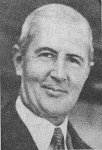 GEORGE REGINALD SIMS (1876-1954) was a leading developer
in the Florida boom years of the 1920s. He moved to New Port Richey
in 1916. He purchased the Port Richey Land Company, owner of some ten
thousand acres along the Pithlachascotee River. He became acquainted
with movie celebrities while spending the summer months at his home
in Great Neck, Long Island, and he invited them to the area, hoping
to develop it as another Hollywood. He donated land for city parks,
one of which is named in his honor. He was a native of Detroit and he attended the University of Michigan. His
parents were Walter R. Sims and Elizabeth Knowles Sims.
He married Marjorie Bartlett Byington (died, age 77, in 1965) on March 1, 1904; she
was selected as Queen Chasco in the first Chasco Fiesta in 1922.
The New Port Richey Post reported in January 1916, "George R. Sims, of
Chicago, President of the Port Richey Co., has erected a bungalow
near the Boulevard and facing the Club House grounds and the Cootie
River, and expects to spend the greater portion of his time enjoying
the pleasures of this section, as well as assisting in the
development of one of the prettiest little cities in the state.”
He was born in Detroit. On Dec. 5, 1930, the New Port Richey Press wrote that Sims "is
known as the 'Father of New Port Richey.'" He was often called “Reg.” A son, George Reginald
Sims II (d. in Tampa on July 22, 1989) was often called “Bunt.”
GEORGE REGINALD SIMS (1876-1954) was a leading developer
in the Florida boom years of the 1920s. He moved to New Port Richey
in 1916. He purchased the Port Richey Land Company, owner of some ten
thousand acres along the Pithlachascotee River. He became acquainted
with movie celebrities while spending the summer months at his home
in Great Neck, Long Island, and he invited them to the area, hoping
to develop it as another Hollywood. He donated land for city parks,
one of which is named in his honor. He was a native of Detroit and he attended the University of Michigan. His
parents were Walter R. Sims and Elizabeth Knowles Sims.
He married Marjorie Bartlett Byington (died, age 77, in 1965) on March 1, 1904; she
was selected as Queen Chasco in the first Chasco Fiesta in 1922.
The New Port Richey Post reported in January 1916, "George R. Sims, of
Chicago, President of the Port Richey Co., has erected a bungalow
near the Boulevard and facing the Club House grounds and the Cootie
River, and expects to spend the greater portion of his time enjoying
the pleasures of this section, as well as assisting in the
development of one of the prettiest little cities in the state.”
He was born in Detroit. On Dec. 5, 1930, the New Port Richey Press wrote that Sims "is
known as the 'Father of New Port Richey.'" He was often called “Reg.” A son, George Reginald
Sims II (d. in Tampa on July 22, 1989) was often called “Bunt.”
HARRISON H. SLAUGHTER (1840-1905) was a farmer and pioneer settler.
The area where he settled was called Slaughter or Clay Sink.
He married Martha Ann McKinney (1839-1903), who was the widow of William Gay,
whom she had married about 1859 at Newnansville.
She had three children with Mr. Gay, and at least ten children with Mr. Slaughter.
According to descendant Frank McKinney, Slaughter escaped a Yankee POW camp
during the Civil War and fled to the Everglades.
A historic marker which will be placed here has:
"Harrison and Martha Ann McKinney Slaughter acquired 120 acres in this area from Jesse Sumner May 20, 1862.”
A deed shows that Slaughter transferred property in S24 T23 R22
to the Hernando County School Board on Oct. 3, 1885.
Martha Ann and Harrison Slaughter donated the land for the Clay Sink cemetery
after they buried their infant daughter there in 1873.
Harrison Slaughter was born in Georgia on Oct. 7, 1840, and died on Sept. 2, 1905.
Martha Ann McKinney was the daughter of John McKinney and Serena Crane.
Martha Ann was born on May 9, 1839, and died on Oct. 6, 1903.
She came from Alachua County but was born in Alabama.
MOSE STEPHEN SLAUGHTER (1866-1945) was a farmer and
stockman. His obituary has: "He was born
at Slaughter, December 8, 1866, and became a prominent
farmer and stockman of Pasco county. For several years
he has made his home in Rerdell, not far from the
community of Slaughter, long ago designated as Precinct 1
of Pasco county and named for his father, Harrison H. Slaughter,
who came to Florida from Virginia as a pioneer.”
THOMAS OWEN SLAUGHTER (1870-1942) was a Pasco County
native and one of the most prominent farmers and citrus growers.
He was married to Mrs. Louanna McCollum Slaughter. His daughter
Mrs. D. S. Bishop was living in Dade City at the time of his death.
Rev. B. G. SMITH (1873-1924) was pastor of the College Street Baptist Church in Dade City for three years,
until the time of his death. He was born in Twiggs County, Georgia, on Jan. 29, 1873, and was educated at Locust
Grove Institute and Mercer University. He entered the ministry in 1898. He served as pastor of
the Vineville Baptist Church at Macon, Ga., and also at East Point Ga. He served as a state evangelist in Georgia
for 12 years before returning to the pastorate to take charge of the church at Coma, Ga. He then
transferred to Monticello, Florida, before coming to Dade City. He was pastor of College Street Baptist Church in Dade City at the time of his death. His obituary states, “During his pastorate in Dade City his church made the greatest
growth in its history, receiving over 300 new members and placing, for the first time, its financial
affairs on a sound footing. In accomplishing this result the spiritual life of the church and its membership
was not lessened but increased, so that it became one of the greatest moral and spiritual forces in the city.”
JOSEPH H. SMITH (1847-1924) was an early resident of Hudson. The following biography was contributed by Judith Jolly.
Joseph H. Smith was born in Terre Haute, Vigo County, Indiana, in
1847. On March 21, 1864, at age 17, he enlisted with other Indiana
volunteers for service in the Civil War. From May 13-15, 1864, his unit
fought in the Battle of Resaca, Georgia. His injuries were such that he
"was a great and frequent sufferer all his remaining life."
Research has not yet revealed the next 20 years of his life. It is
presumed that he married and perhaps had a family. It is also presumed
that he remained in Indiana.
By 1887, he was in Florida and was the organizing and ‘first settled’
pastor of present-day First Baptist Church, Bushnell in Sumter County
(Alachua Baptist Association). In 1888, he also served Bethany Baptist
Church in Pasco County. Per WPA records, he remained at the Bushnell
church through 1890. Florida Baptist Annuals record him in Bushnell
from 1890 to 1892, and in Magdalene, Hillsborough County, from 1893 to
1897. In 1898, his address was Pasco, Pasco County, Florida.
In 1902, per South Florida Baptist Association records, he was pastor
of Clearwater Baptist Church (present-day Calvary). That same year, per
Pasco Baptist Association records, he was pastor of Tarpon Springs
Baptist Church. In 1903-1904, he lived in Lacoochee, a busy sawmill
community in Pasco County and pastored Emmaus Baptist Church, a member
of Pasco Baptist Association.
About 1904, per Hudson, one of the Makers of America series, he moved
to that community on Pasco County’s west coast. He was appointed
postmaster of Hudson on June 27, 1906, a post he retained until 1921. In
1906 and 1907, he also pastored Good Hope Baptist Church in Hudson. He
remarried in 1908, per the 1910 census. It was a second marriage for
Joseph H. Smith and for Florence, his wife. He is listed in Pasco
Baptist Association records as an ordained minister through 1912 and in
Florida Baptist Convention records through 1921.
Joseph H. Smith died at his Hudson home on January 19, 1924. He was
age 76. His obituary from the Dade City Banner of Feb. 8, 1924, follows:
DEATH OF PIONEER PREACHER AND WAR VETERAN.
Hudson, January 29.—Brother Joseph H.
Smith died at his home at Hudson on Saturday the 19th, after two weeks
of intense suffering. All that a skilled physician could do was done for
him, as well as the best of nursing, but a time seems to come to all
when nothing awaits. Brother Smith was born at Terre Haute, Ind., in
1847, and was 76 years of age. He enlisted at the age of 17 with the
volunteers of his state, and continued with the army until the close of
the war. He was wounded at the battle of Resaca, and on account of this
was a great and frequent sufferer all his remaining life. Brother Smith
had preached all through this part of South Florida, and in consequence
as well as because of his superior intelligence and knowledge of the
Bible was widely and favorably known. His fireside and veranda were
favorite gathering places for those who enjoyed such conversation. He
will be greatly missed by all. He was buried in the Baptist cemetery at
Elfers on Sunday, the 20th. He leaves a widow, Mrs. Florence
Smith.
"The Baptist cemetery at Elfers" is the present-day West Elfers
Cemetery. Due to cemetery neglect and vandalism over the last many
years, there is no remaining evidence of his gravesite.
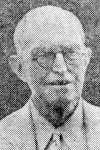 JOHN G. SNELL (1857-1943) served as Justice of the Peace of
New Port Richey for 21 years. On Nov. 11, 1924, the Tarpon Springs
Leader reported that Snell had been elected justice of the peace
on Tuesday by a vote of 49 to 2. He was born in Albany, N. Y. According
to WPH, “He came to New Port Richey in 1918, settling first in
Brooksville, later moving to New Port Richey.”
JOHN G. SNELL (1857-1943) served as Justice of the Peace of
New Port Richey for 21 years. On Nov. 11, 1924, the Tarpon Springs
Leader reported that Snell had been elected justice of the peace
on Tuesday by a vote of 49 to 2. He was born in Albany, N. Y. According
to WPH, “He came to New Port Richey in 1918, settling first in
Brooksville, later moving to New Port Richey.”
FELIX SOWERS (died, 1884) married Martha Ann Bradshaw (died, Aug. 22, 1893) on June 29, 1843, in North Carolina.
In the late 1850s he moved to Atlanta and was living there in the 1870 census.
An article in the Atlanta Constitution of Sept. 6, 1876, mentions that
Felix Sowers built the smoke stack for a new cotton factory.
By 1879 he was living in Hopeville, which would become Port Richey, as his daughter wrote that she was married in Port Richey on Nov. 11, 1879.
The 1880 Hernando County census shows him as 62 years old, born in North Carolina, and it shows his wife M. A. as 61 years old, born in Virginia.
On Jan. 30, 1883, Sowers received a deed for S30, T25, R16E, the South half of Lot 2.
This area is near the mouth of the Pithlachascotee River in what would later become Port Richey.
He also owned the NE4 of the SE4 of S32, T25S, R16E, which is apparently on what is now Grand Boulevard.
In 1883, Sowers sold his property on the coast, which included a house, to Aaron McLaughlin Richey,
who established the first Port Richey post office there.
Felix Sowers is buried at Oakland Cemetery in Atlanta, where the records indicate he died in 1884 at age 60.
Children:
- Winfield Scott, m. Lewis G. P. Hope in 1882
- Martha (or Marcella)
- Anna, m. William Maxie Hope in what would become Port Richey on Nov. 11, 1879. The CSA records for her indicate that she moved to Tampa in April 1900.
WILLIAM ALBERT SPARKMAN (1875-1945)
was a Pasco County surveyor and practiced in the county as a civil engineer. He was
born in Williamson County, Tenn. His wife Ida was deputy clerk of Pasco County.
JAMES IRVIN SPIVEY (1837 or 1838-1911) was a Civil War veteran from Georgia.
He is one of the county commissioners shown in this 1909 photo.
He often led services at Oakdale and nearby communities. The following is
from The History of Zephyrhills 1821-1921:
Irvin Spivey had a most unusual voice with a unique carrying
quality. General Gordon of the Confederacy discovered this. He
proceeded to make the most of the attribute. Bellowing like a bull,
Irvin Spivey transmitted signals in code that could be heard for
miles. Most of his bellowing was done in the Smoky Mountains of
Virginia. The enemy learned that Gordon’s frequent devastating
raids were in some way connected with this bellowing bull, and, unless
they were well prepared, would avoid confrontation. On one
occasion, the battle being joined, Gordon realized that his supply
of ammunition was running out. He sent for young Spivey and said
to him, "If you have ever bellowed in your life, do it now. It is our
last hope.” The maneuver was a success. The enemy apparently decided
that Gordon’s force, known to be one of the South’s best,
was reinforcing the forces that the scouts had reported, and retreated.
"The Bull" was given a citation and presented with a gold
fountain pen engraved with his name and the date of that battle,
September 4, 1864.
According to Judy Hughes, James’ brothers and sisters were:
John (q.v.), Dannell, Patrick "Parrot,"
Dora, Effie, and Minnie. They are all from around Douglas, Ga.
Their parents are Mathew and Adelina.
A detailed timeline of Spivey as a Florida Baptist minister is here.
JOHN DAVID SPIVEY (1840-1921), a Civil War veteran from Georgia,
and brother of James Irvin, filed for homestead land between Pretty Pond and what is now Lake Zephyr.
He built a home and called the place Oakdale. He held Baptist services in his home
and later the Spivey brothers erected a building which was used for a combined
school and church until the Lakeview Baptist Church was built.
School board minutes of Sept. 5, 1887, show the Oak Dale School (No. 21), with
trustees A. E. Geiger, J. D. Spivey, and M. G. Frizell.
He married Roxie Ann Wooten (1845-1895) and in 1898 he married Delilah Wilson Seeley.
WILLIAM SEBRON STANDLEY (1834-1914) and his wife, Fannie Bradley Standley, arrived after the Civil War. They are shown in the 1880 census in Precinct 7 of the 60th district of Hernando (now Pasco) County.
William, who was born in Alachua County, served in the Civil
War. He was wounded at Sharpsburg, Tenn., and later captured
by federal forces near Murfreesboro, Tenn.
William and Fannie are buried in Mount Zion Cemetery. picture
WALTER RALEIGH STANLEY (1860-1944), a son of William Sebron Standley, was “well and favorably known
throughout this section of the state,” according to his obituary in the
Dade City Banner.
Walter Raleigh Stanley dropped the D in Standley.
SAMUEL H. STEVENSON (1810-1897) and his wife Elizabeth Osteen (1820-1900) were apparently the
first property owners in what would become Seven Springs, perhaps by 1860. At this time, the area
was part of Hernando County. He is shown on the Hernando County tax roll of 1860.
Records show that his voter registration in Hernando County was accepted by mistake on Aug. 28, 1867,
as he was born in Canada and did not exhibit documentation of his naturalization.
He replied that he had taken the oath and that he would have nothing more to do with it.
On Nov. 11, 1871, the Florida Peninsular reported that Samuel H. Stevenson attended the Tax Payer’s
Convention of Hernando County.
According to Julie J. Obenreder in WPH, Mrs. Stevenson performed the duties of midwife and
assisted in the birth of many babies. Stevenson acquired land near Clearwater through the Armed Occupation Act
in the 1840s.
According to Ash, their children were:
- Sandusky Stevenson (1845-1934), married William James Harden Mobley
- Henry Washington Stevenson (1848-1907), married Elizabeth Tennessee Luffman. Their first child was Mary Elizabeth
Stevenson (b., Seven Springs, Sept. 2, 1875; d. December 1958).
- Sarah Ann Stevenson (1851-1940), married William J. Baillie
- Jane T. Stevenson (1854-1934), married Jesse Hay
- Constantine “Bud” Stevenson (1857-1897), q.v.
The 1850 census for Hillsborough County shows the children of Samuel Stevenson as Martha Jane, Mary, Henry Washington, and Sandusky.
CONSTANTINE “BUD” STEVENSON (1857-1897), married Mary Ann Louisa Luffman (1854-1948).
According to Mary’s obituary, she was born at Silver Springs and lived to the age of 93 years,
seven months, and four days. They were married at Seven Springs on Dec. 23, 1875, and
lived there several years before moving to Hudson. See the Whitehurst-Whidden-Stevenson feud.
The children of Constantine and Mary Stevenson:
- Samuel H., b. Oct. 10, 1876, Seven Springs; d. 1881 or 1883 at Hudson
- Cora, b. 1878, Seven Springs, m. J. G. "Gip" Brown on Feb. 2, 1902
- Alva, b. 1880, Seven Springs, m. William M. Mosely in Nov. 1910, d. 1958
- Richard D., b. 1882, d. 1964, q.v.
- Pearl, b. Feb. 14, 1885, Hudson; m. Lewis Gaines
- Eliz “Bessie,” b. July 7, 1887, Hudson; m. John Bragg; d. 1978
- Olive B. “Sweetie,” b. Jan. 21, 1891, Hudson, m. John Morgan Weeks (founder of Weeks Hardware in Brooksville)
- John Hugh, b. Sept. 19, 1893, Hudson, d. May 25, 1909, in an accident
Clearwater Pioneer Resident Celebrates
Her 93rd
Birthday at Home in Elfers
This article appeared in the Clearwater Sun on Oct. 12, 1947.
ELFERS — Mrs. Mary A. Stevenson, member of a pioneer family
that first homesteaded the land upon which northern Clearwater is now
built, and who later moved to the section of Seven Springs about the
time of the War Between the States, was very proud to be able to
celebrate her 93rd birthday recently.
While her eyesight troubles her, she is able to go about easily
except for a lameness caused when she recently slipped on a rug.
“Drat it," said Grandma, “If I had my way every last rug
would go out the door!”
Still keen of mind, she loves to tell of the old days, especially of
her marriage to Constantine Stevenson, who was “the nicest looking
young fellow around,” at the time she was 15 years old.
She related how the hurricane and tidal wave of 1870 made water back
up in the creek north of Clearwater and swept away everything the family
possessed. “All the buildings were leveled, stock was killed and
parts of featherbeds were found in the trees.”
“Speaking of Stephenson, Creek,” said Grandma, “It
makes me so mad. These young fellers don’t know how to spell the
name of that creek. It should be S-T-E-V-E-N-S-O-N! Not the way they
spell it now-a-days.”
Having lost everything in the 70 storm, Constantine and family moved
to join others who first settled around Seven Springs back in the 1850s
to engage in the cattle-raising business. “One year they branded
over 150 young calves. Children who came to the Springs with the early
families were many times sickly but after they lived there a while,
bathing in the river and drinking the water, they grew fat a pigs. There
are five different kinds of spring water there, plain, sulphur,
bluestone, and freshwater,” she said.
Telling of a family experience, when her father-in-law, Capt. Sam
Stevenson, “first moved up to the Springs, there were plenty of
Indians in the woods.... In the Indian War (before the War Between the
States) the Indians would be so bad that they would “cut the heel
strings of the white women, take their children from their arms, bash
their brains out against a tree and then throw the dead bodies into the
river.” Captain Stevenson and his men rounded them up, drove them
to Tampa, where they were shipped to the Everglades Reservation.
Years later, the family planted an orange grove and brought in sheep.
The wolves “used to howl so much at night in the woods, and kill
many sheep. One night we lost 25,” Grandma related.
“At that time, there were plenty of wild pigeons and geese.
Young men used to build fences by splitting rails, 200 rails being a
day’s work. After the rail-splitting job was completed, all the
neighbors would enjoy a frolic.”
On her first trip to Tampa, about 1871, Grandma stated, the bridge
over the Hillsborough River had just been built, and driving over it,
she and her young husband “were behind a team of horses. Next came
a team of oxen, followed by a horse and buggy. At that time, there were
in Tampa only a post office, two stores, a hotel and a blacksmith shop
under a large mulberry tree. And later there was built a wooden sidewalk
from the blacksmith shop to the postoffice. The streets were just old
sand trails.
“In 1871, Tarpon Springs had just started its sponge hooking.
Later came the great freeze of 1895 which killed all of the citrus, and
then the Spanish-American War.”
She has a daughter who married one of the Spanish-American veterans,
and now is living in Tampa
RICHARD D. STEVENSON SR. (1882-1964) was born at Seven
Springs, the son of Mary Ann and Constantine Stevenson, and the
grandson of Samuel H. Stevenson. On July 9, 1905, he married Sarah Early
Hicks (1892-1969) and they lived in Port Richey at what is now Route 595 and Pine
Street. They owned a 20-acre farm which they sold in 1908. They
later purchased many acres of land in the Elfers area. In 1915
Stevenson started a small real estate business, advertising in
northern papers, according to WPH. He was a member of the school board for 18 years.
According to Ash, he operated the first real estate office
in western Pasco County in his home from 1910 to 1923. She wrote,
"He sold property, sight unseen, to Northern residents and others.”
He was elected to the Pasco school board in 1936 and
served until Jan. 4, 1955. Children:
- Pauline, b. Mar. 12, 1909, Elfers; m1. Wilfred G. Bailey (1905-1933); m2. Albert L. Ash Jr. (b. 1911); d. June 4, 1994. She was the author of Florida Cracker Days in West Pasco County 1830-1982.
- Eva Lois, b. Nov. 13, 1910, Elfers; m. Walter C. Little; d. Dec. 1982
- Infant, b. Dec. 30, 1912; d. Jan. 1913
- Howell Howard, b. Mar. 22, 1915; d. Jan. 2, 1920
- Gertrude, b. July 9, 1917, Elfers; m. Cullen R. Burgess
- Wilmon Matthew, b. June 22, 1919, Elfers; m. Elizabeth Alfantis (1924-1960); m. Alma Grill Bedson; d. June Dec. 31, 2007.
His daughter, Beva Joan (1944- ), married John Karay.
- Harmon Constantine, b. Mar. 7, 1922, Elfers; m. Gloria Kelly
- Hazel, b. Oct. 1, 1924, m. Don E. Uzzle. They had three children:
- Steve Uzzle (1944- ), who married Sandra Safranek
- Richard Uzzle (1952- ), who married Lynelle Murtagh
- Gregory Uzzle (1955- ), who married Mona Hnilica
- Richard D. Jr., b. Oct. 30, 1926, Elfers; m. Audrey Delane Potter; d. Sept. 21, 2005. He was an engineer for the Florida Department of Transportation
and the recipient of the James Dean Engineering Award for his work on the Sunshine Skyway Bridge. Children included Richard III and Robinson Stevenson-Barrus.
HENRY STRAUBER (1898-1973) was elected
a county commissioner in 1972 but died in office the following September.
Before being elected to the county commission he was the County Coordinator,
and he was instrumental in the establishment of the position of
County Administrator.
Strauber Memorial Highway is named for him. He was a founder of the
Southwest Pasco Volunteer Fire Department. Earlier, he had served
four five-year terms as Fire Commissioner in Bethpage, N. Y., and
three terms on the Bethpage School Board.
BARTOW DANIEL STURKIE (1861-1928) served as the sheriff of Pasco County from 1904 to 1916 and from 1920 to 1924.
In 1913 he performed the first legal hanging in Pasco County. He also served
four terms as city marshal of Dade City. He was born in Opelika, Alabama,
on Aug. 14, 1861, and died in Chattahoochee.
He came to Hernando County in 1879, living near Brooksville for two years.
He came to what is now Pasco County in 1881.
He married Alice Gertrude Harrell (b. Sept. 4, 1861; d. Aug. 2, 1907, Dade City). Their children were
Robert Bartow (q.v.), Ashford, and Fay.
ROBERT B. STURKIE (1887-1932) was an attorney, mayor of Dade City,
and in 1930 was elected to the state legislature.
He was born in Dade City and lived in Pasco County all his life except for time in the military.
He served in the Spanish-American War and in World War I, when he
was a Lieutenant Colonel. He married Franc L. Trough (1889-1929), a classmate at Stetson University.
They had one child, Alice Carroll, who died in infancy.
He served as mayor of Dade City in 1912-13.
In 1929 he married Mrs. Edith Akin Collins of Leesburg.
His father was Bartow Daniel Sturkie, a Pasco County sheriff.
HENRY H. STUBBLEFIELD (1873-1953) was an early settler who
served on the Port Richey City Council in 1925. He married Winnie Lawton
(b. July 7, 1889; d. April 24, 1940), who was an early school teacher in
Port Richey before their marriage. H. H. Stubblefield died on Dec. 24,
1953. In 1923, Winnie Stubblefield wrote the following for the Tarpon
Springs Leader, one of a series of recollections by early settlers.
I really can't see why I should tell my story for I have no
home as yet to point to with pride, and no wonderful tale of immense
sums of money earned. Mine is the everyday story of the family who comes
to Florida with a limited amount of money and tries to get a foothold
while the country is young and land is cheap. Fifteen years ago my
husband came to Florida and invested in ten acres out Hudson way. Twelve
years ago I was teaching in Florida, in Port Richey, and met my husband,
who was here looking after his land. We were married and went back to
Ohio, where we lived until two years ago. During that time our babies
grew along toward maturity. You know what they say about Florida sand. I
believe I had my shoes full, for we both felt it was time for us to go
south and see what we could do about our land, lying idle all this time.
So we sold out and packed our personal belongings and started for
Florida. Arriving in Tampa, we purchased 200 hens, loaded them onto our
truck with the children and other effects, and started for Port Richey,
the land of our future home. We arrived, but what was our dismay to see
where the house once stood a mass of ashes and debris. Our house was
burned. We stood a minute overcome by the catastrophe, then turned the
truck around and headed for Tampa. We purchased an army tent and
returned to Port Richey and camped out. Of those long, weary, dreary,
days when we worked like negroes clearing the palmetto land of the
discouragements I cannot tell, but we finally cleared the land and got
started, built a screen porch where we could eat and sleep in comfort,
bought a cow, built a shed for fodder, and house the chickens, and on
the whole we had a wonderful time accomplishing what would in time be
the home for our future. It has not been comfortable. I missed cruelly
the comforts of my Ohio home, but somehow we folks in Florida forget the
hard part and let the sunshine in and it is in this way we accomplished
so much. There is something in this lovely southern state that keeps us
happy in spite of difficulties and now we are so busy planning our new
house, and the grounds about it, we have succeeded, and have found there
is a profit and a living in the combination fruit, dairy and poultry
farm. It isn't the farm so much as the man, tho of course we have fine
truck lands that will grow the best of vegetables, but you have to work,
and you must accumulate your finances dollar by dollar, the same as in
the north. Are we sorry? No, a hundred times no. When we have as good a
home here as we left I in Ohio, I shall be the happiest and most
contented woman in Pasco county.
SUMNER. Information about the Sumner family is on a separate page here.
SAMUEL WALTER SURRATT, JR. (1920-2012). The following article is taken from the
Zephyrhills Free Press of
Aug. 16, 2012.
Former Councilman Sam Surratt Dies At 92
By GARY S. HATRICK
Samuel Walter Surratt, Jr. passed away Tuesday morning surrounded by his
family and under hospice care in Dade City.
The former councilman had battled with Parkinson's disease, heart disease
and pneumonia.
Surratt was born in Decatur, Ala. March 26, 1920 to Samuel Walter Surratt,
Sr. and Nellie Evelyn Howard Surratt. His family moved to Clearwater, Fla.
when he was in the fifth grade. After high school he moved to Dade City. He
was married on July 31, 1941. He moved to Zephyrhills in 1944.
In Dade City Surratt owned the Iron and Welding Works located next to the
Pasco County Courthouse in the building that now houses the Law Firm of
Greenfelder, Mander, Murphy, Dwyer & Morris.
Joining the Army in 1945 he served in France where he was a ships welder.
The years after World War II were years of significant change for the
country. Modern ways of doing things and a growing and more mobile
population meant that small towns could not continue to do things the way
they had been done for many years.
It was in this post-war Zephyrhills that Surratt began serving on the city
council in 1954. Except for one break after his first term, he would remain
on the council for 23 years until 1977. The reason he served an odd number
of years is because he served the last year of the term of retiring council
member, Herman Wolfe. He served as president of the council from 1975 to
1976.
As one of the city elders, Surratt helped guide the city through the
crucible of rapid change.
During his tenure he saw the building of City Hall and Zephyr Haven Nursing
Home, the establishment of a city sewer system and the sale and development
of the right-of-way that belonged to the Seaboard Railroad and ran right
along the U.S. Highway 301 corridor.
In an interview about 10 years ago, Surratt recalled his time on the
council.
In those days, Surratt said, a lot of people didn't pay taxes. "We didn't
have the money that they have now," he said.
Since the city didn't have a budget for the city department heads, the city
responsibilities were parceled out to the individual city council members.
The council members served as heads of committees. One member had parks;
another had streets, another finances and on it went. At city council,
members would report on their committee to the rest of the council.
Surratt's son, Sam, recalls driving down the street in a truck with cold mix
and tamping the repair material into potholes when his father was in charge
of streets.
"He was so dedicated to this community and the people of this community,"
the younger Sam said, "He had a passion for this community."
The council met at what is now McClain & Alphonso, P.A. at 38416 Fifth
Avenue. That was the city hall and the police chief's office.
Surratt related an anecdote about a day when someone had purchased a gun and
wanted the police chief to check to see if it was in good working order.
Neither thought there was a round in the chamber but there was and when the
chief was checking the trigger, the gun went off and the bullet shattered
the window of a pool hall that was across Fifth Avenue. Laughing, Surratt
said, "Them that was in there shooting pool - they scattered."
Unlike today when such an incident would warrant an investigation and big
headlines it was just considered an accident and it was quickly forgotten
except as an amusing story. "At that time, they never paid much attention to
it," Surratt said.
During Surratt's tenure as a city servant, they build the original portion
of the current city hall. They sold certificates to pay for it and it cost
$450,000, Surratt said.
The land for the retention pond across the street cost $47,000. That is an
area where Surratt believes the city missed an opportunity.
The retention pond was part of the land that belonged to the Seaboard
Railroad. When the railroad pulled out of Zephyrhills, the railroad
right-of-way went right through town. Surratt was approached by a man that
told him that the city could purchase the land for $350,000. Surratt was in
favor of the proposal, but the majority of the council "didn't want to get
into the real estate business."
"We lost out on that thing," Surratt said. He felt that way because, besides
the city having to purchase the retention pond property later, the land was
purchased by individuals and sold as prime property that now sports fast
food restaurants and other businesses. He thinks that cash should have gone
into the city's coffers.
The city's Oakside Cemetery is a beautifully kept historical site. An
historical marker touts the cemetery as a "hallowed tract" which is the
"burying ground of veterans of six wars...the Civil War, Spanish American
War, World War I, World War II, the Korean Conflict and Vietnam."
It was not always so beautiful.
"Our cemetery was really run down," Surratt said. "There wasn't anyone to
care for it." Surratt made a motion to charge a fee that would cover the
cost of upkeep and the cemetery got a makeover.
When Surratt first took his seat on the council, the city was not on a city
sewer system. The city was growing and the septic systems were not meeting
the needs.
Believe it or not, city sewers were not a popular idea. "When we started
talking about sewers, the people went up in the air. We had to just go ahead
and do it and it turned out to be one of the best things we ever did. People
don't like change."
"I'll tell you what," Surratt said. "When I was on there I enjoyed all of it
and I had to do the best I could and usually it worked out pretty good."
Well, maybe he didn't enjoy all of it. Surratt was on the council during the
turbulent time of 1976 that saw the police chief, fire chief, city manager
and others including the now-retired police chief Robert Howell fired.
The late James Bailey was a newcomer to the council at that time. He found a
comrade in arms in veteran member Surratt. "We fought and fought that thing,
Jim and myself," Surratt said.
Later the council members who fired them were recalled, and the fired city
staff rehired except for city manager John Phillips who had found another
job by that time.
"People don't know how much is lost when you go through something like
that," Surratt said.
Surratt didn't just serve in government, he got his hands sooty spending 21
years as a member of the volunteer fire department.
Standing behind him in all those decisions was his wife Raybelle nee
Rachael Britts.
"Every Monday night for over 20 years he was somewhere either the city
council or the fire department," Raybelle said.
Surratt met her at the old Crescent Theatre in Dade City. "I went in there
one time and Raybelle, she graduated from Pasco High, she was selling
tickets there. "I wanted a date but I didn't get very far."
Their marriage of 71 years would seem to prove that he got far enough. "I
guess I worried her to death," Surratt chuckled.
The Surratt's had two children, Sam who operates Lee Reed Insurance and an
older daughter who passed away when she was 51. He left quite a legacy of
names as there are currently five Sam Surratt's, Raybelle said.
When he retired, Surratt spent some time on his hobbies of hunting, fishing
and gardening especially raising orchids, and went to "Scratch" at Barb's
Restaurant faithfully until his health prevented him from doing so.
Surratt's service was honored by him being chosen to be one of 10 grand
marshals in the Centennial Founders' Day Parade in 2010. If there was
anything he regretted in the changes he helped direct it was the loss of the
small town atmosphere.
"If you went down West 54 and you met a car, you would wave at them because
you knew them," Surratt said with a tinge of sadness. "That's no more."
Sam belonged to several organizations within the city and he was a Mason for
more than 50 years.
Services for Surratt will be held at First United Methodist Church of
Zephyrhills on Saturday, August 8, 2012 with arrangements made by Whitfield
Funeral Home. After the funeral he will be laid to rest in the cemetery he
had helped clean up years ago with his beloved orchids inscribed on his
stone.
Two photos of Surratt are
here and
here.
JOSEPH F. SWARTSEL (1847-1924) and his wife Sarah (1848-1934)
migrated from Kansas to Florida in November 1912. They arrived in
Tarpon Springs by train and traveled to Elfers by mule and wagon.
They planted a nursery of citrus stock on land they had purchased
while in Kansas located where the first phases of the Colonial Hills
subdivision are now situated.
Children included:
- Howard B. Swartsel (1881-1938). At the time of his death he was production manager of the Holly Hill
Fruit Products Co. in Davenport, where he had lived for nearly 9 years.
- Noah Morningstar Swartsel (1883-1961).
(picture)
He married Sadie Connell (1885-1947) on Feb. 3, 1907, in Lyon County,
Kansas. He returned to Elfers in 1939 with his family after working in
several locations in Florida in the citrus industry. Sadie taught at the
Elfers school around 1919 to 1921.
Children:
- Maxine Swartsel (m. Gause), taught school in Tarpon Springs
- Ross V. Swartsel (d. 1997)
- Joseph Dale Swartsel, graduated from Gulf High School in 1945
(picture). Wife: Mary K.
- Everett “Eddie” F. Swartsel, graduated from Gulf High School in 1946
(picture). A son is Mark Swartsel (GHS ’69).
|